Agreed and Uncontested Divorce
How Does an Agreed Divorce Work?
When spouses are able to reach an agreement about the terms of their divorce, the process is often simpler and more predictable than contested litigation. However, an agreed divorce still requires legal documents, court approval, and compliance with Oklahoma’s procedural requirements. Understanding the process can help ensure that your agreement is properly prepared and accepted by the court.
If you and your spouse have already reached an agreement, you may have already completed the most difficult part of the process. Preparing the necessary documents and presenting the agreement for court approval is often the next step toward finalizing the divorce.
What is an Uncontested and Agreed Divorce?
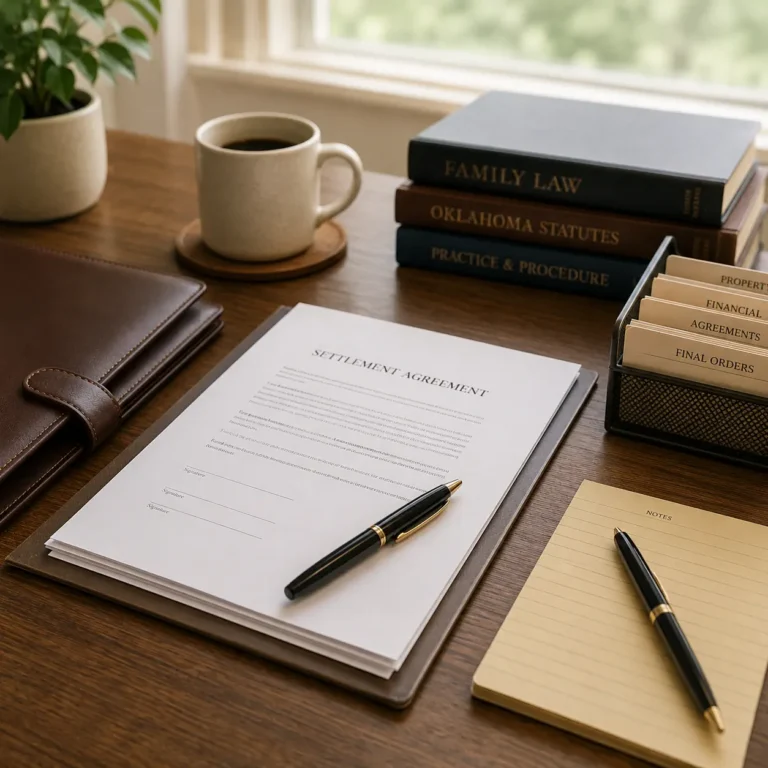
An agreed or uncontested divorce occurs when both spouses agree not only that the marriage should end, but also on all of the major issues that must be resolved before the divorce can be finalized. Those issues may include the division of property and debts, spousal support, financial responsibilities, parenting schedules, child support, and other matters involving children. Once an agreement has been reached, the focus typically shifts from resolving disputes to properly documenting the agreement and obtaining court approval.
Major Issues Involved in an Uncontested and Agreed Divorce:
Why Uncontested and Agreed Divorces Matter
When spouses are able to reach agreements on the major issues in their case, the divorce process is often simpler, faster, and more predictable than contested litigation. Although legal requirements and court procedures must still be followed, an agreed divorce can reduce conflict, limit the need for court hearings, and allow the parties to focus on finalizing their agreement rather than resolving disputes.
We Have a Divorce Agreement. What Happens Next?
Reaching an agreement is often the hardest part of an uncontested divorce. The next step is making sure the agreement is properly documented, complies with legal requirements, and is presented to the court in a form the judge can approve. Tell us about your agreement, and we can help you determine what is needed to move forward.
Agreed Divorce is often an issue when:
- Agreement on the divorce
- Agreement on the children
- Agreement on finances
- Agreement on property
- Agreement on debts
- No issues left to decide
How We Approach Uncontested and Agreed Divorce
1
Understand the Agreement
We begin by reviewing the terms the parties have already agreed upon.
2
Review for Completeness
We evaluate the agreement to ensure all required issues have been addressed and that the terms comply with legal requirements.
3
Prepare the Court Documents
We prepare the pleadings, agreements, and other paperwork necessary to present the divorce to the court.
4
Finalize the Divorce
We appear before the court with the client and request approval of the agreed divorce and entry of the final decree.
An agreed divorce requires agreement on all of the major issues that must be resolved before the marriage can be dissolved. If the parties disagree on even one significant issue—such as property division, child custody, child support, or spousal support—that issue may require additional negotiation, court involvement, or litigation before the divorce can be finalized. Reaching agreement on most issues can still be valuable, but unresolved disputes often require their own process for resolution.
Why a Properly Drafted Decree Matters
Even when spouses agree, the court generally requires a drafted official court order that addressed the issues involved in the divorce and comply with legal requirements. Clear and complete documentation can help avoid misunderstandings, delays, and future disputes about what the parties intended. This order is called a Decree of Dissolution of Marriage.
Benefits of a well-drafted court order:
- Clear property and debt division
- Complete parenting plans
- Child support requirements
- Future enforcement and clarity
- Court approval requirements
- Avoiding unintended omissions
How to Prepare
Information Commonly Needed for Agreed Divorces
- The general terms of the agreement
- Any issues that remain uncertain or unresolved
- Information about children, parenting schedules, and support
- Basic details about property, debts, and financial responsibilities
Why Preparation Matters
One of the primary advantages of an agreed divorce is the ability to move through the process more efficiently and with less conflict. Having a clear understanding of the agreement and the information needed to document it can help avoid delays, reduce unnecessary expense, and allow the court paperwork to be prepared more quickly. Good preparation helps ensure that the agreement can be presented to the court in a complete and organized manner so the divorce can move toward final approval.
Now sure what you need or how this works?
Schedule a strategy consultation to get clarify on your case, and how we can help protect what matters most to you.
Common Questions
Related Family Law Topics
Child Custody
Child custody cases focus on parenting schedules, decision-making responsibilities, and the day-to-day care of children. Courts are primarily concerned with creating arrangements that support the child’s stability, safety, and best interests.
Child Support
Child support addresses the financial support of children while a case is pending and after final orders are entered. Oklahoma uses guideline calculations based largely on the parties’ incomes and parenting arrangements. This include temporary support.
Temporary Orders
Spousal support, sometimes called alimony, involves financial assistance from one spouse to the other. Courts may consider income differences, financial need, and the circumstances of the marriage when evaluating support issues.
Court Process
The court process typically begins with filing the case and moves through stages such as temporary orders, information gathering, settlement discussions, and, if necessary, trial. Understanding the process can help reduce uncertainty and plan ahead.